***Disclaimer***

Disclaimer: The Wizard of 'OZ' makes no money from 'OZ' - The 'Other' Side of the Rainbow. 'OZ' is 100 % paid ad-free

Sunday, March 20, 2016

We did not invent colours...

C O L O U R
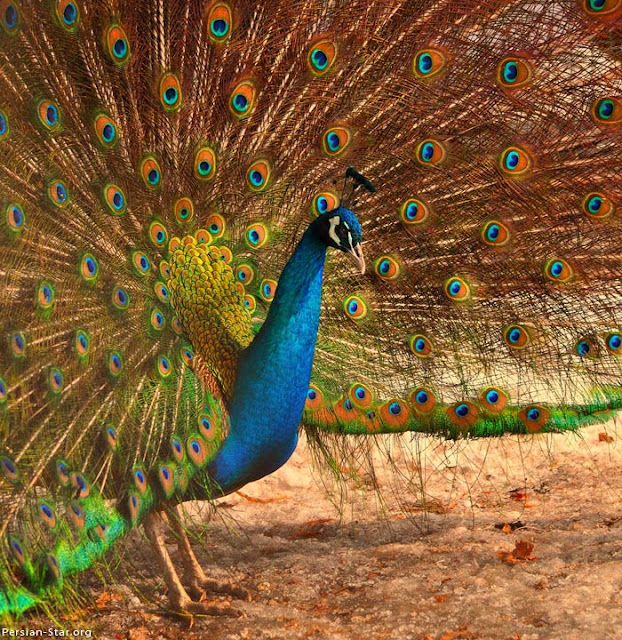
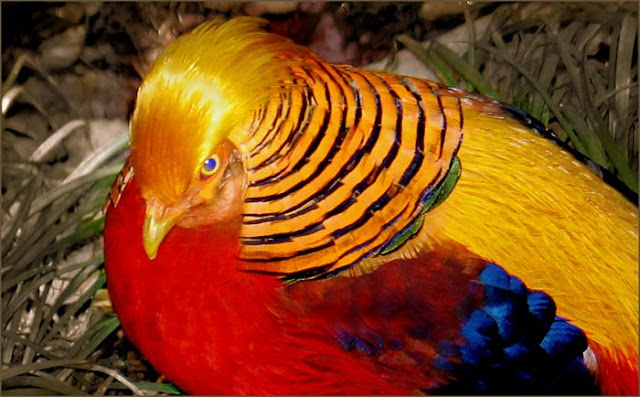
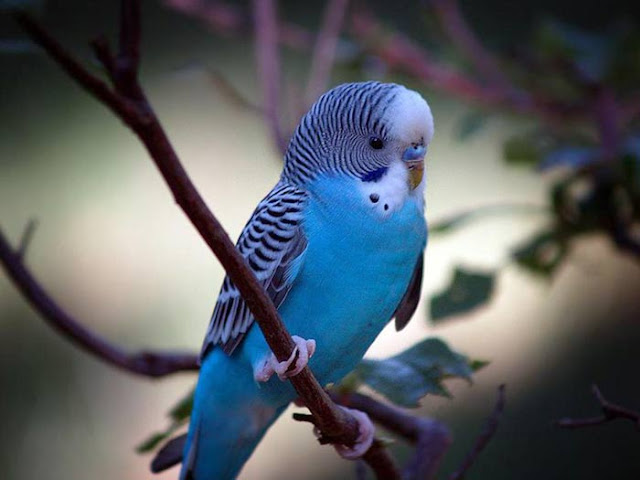
WE DID NOT INVENT COLOURS - GOD DID - SEE THESE BIRDS

BIRDS
Kindness is in our power even when fondness is not.
~Henry James~

BIRDS
Compassion is language the deaf can hear and the blind can see.
~Mark Twain~

BIRDS
Carry a heart that never hates, a smile that never fades and a touch that never hurts.

BIRDS
Today I bent the truth to be kind, and I have no regret,
for I am far surer of what is kind than I am of what is true.
~Robert Brault~

BIRDS
Treat everyone with politeness, even those who are rude to you,
not because they are nice but because you are.

BIRDS
Never look down on anyone unless you are helping them up.

BIRDS
A good character is the best tombstone.
Those who loved you will remember.
Carve your name on hearts, not on marble.

BIRDS
It's nice to be important but it's more important to be nice.

BIRDS
Today, give a stranger one of your smiles.
It might be the only sunshine he sees all day.

BIRDS
If you want others to be happy, practice compassion!

BIRDS
I always prefer to believe the best of everybody, it saves so much trouble.
~Rudyard Kipling~

BIRDS
Don't be yourself — be someone nicer.

BIRDS
Never miss an opportunity to make others happy,
even if you have to leave them alone in order to do it.

BIRDS
Love your enemies - it will confuse them greatly.

BIRDS
There is one word which may serve as a rule for all one's life — reciprocity.
~Confucius~
BIRDS
Grownups know that little things matter, and that relationships are based on respect.

BIRDS
Don't wait for people to be friendly, show them how.
~Henry James~
BIRDS
The most important trip you may take in life is meeting people halfway.
~Henry Boyle~

BIRDS
When I was young, I admired clever people. Now that I am old, I admire kind people.
~Abraham Heschel~

BIRDS
If we should deal out justice only in this world, who would escape?
No, it is better to be generous for it gains us gratitude.
~Mark Twain~

BIRDS
Be tender with the young, compassionate with the aged, tolerant of the weak,
because someday in your life you will be all of these.
~George Washington Carver~

BIRDS
You can't live a perfect day without doing something for someone
who will never be able to repay you.
~John Wooden~

BIRDS
If those who owe us nothing gave us nothing, how poor we would be.
~Antonio Porchia~
BIRDS
You cannot do a kindness too soon for you never know how soon it will be too late.
~Ralph Waldo Emerson~

BIRDS
By swallowing evil words unsaid, no one has ever harmed his stomach.
~Winston Churchill

BIRDS
Real generosity is doing something nice for someone who will never find out.
~Frank A. Clark~

BIRDS
We have two ears and one mouth so that we can listen twice as much as we speak.
~Epictetus~

BIRDS
Don’t let those who take advantage of your generosity stop you from being generous.
~Author Unknown ~

BIRDS
Be a rainbow in someone else’s cloud.
~Maya Angelou~

BIRDS
In a world full of people who couldn't care less, be someone who cares more.
~Author Unknown ~


BIRDS
Love thy neighbour and if requires that you bend the truth, the truth will understand.
~Robert Brault

Have Bucket List, Will Travel...

SIMIEN GENIPABU NATAL, RIO GRANDE DO NORTE, BRAZIL
SIMIEN GENIPABU
NATAL, RIO GRANDE DO NORTE, BRAZIL


Brazil's Rio Grande do Norte is the gateway to Genipabu, where enormous white-sand dunes meet the Atlantic. To explore the dunes, hire a professional bugueiro (buggy driver) who can whisk you off for a roller-coaster tour of the hair-raisingly steep dunes, which can top 300 feet.

-Ostara-
May the blessings of Eostre
be upon you this special day!

It's time for Ostara, the spring equinox, which falls on March 20 for my readers in the northern hemisphere. This is a season of balance, of equal hours of darkness and light, and a time when we can rejoice in knowing that new life is returning to the earth. May it be filled with blessings and magic!

Eastre, the Goddess of Dawn and Spring
Eostre, the Goddess of Dawn and Spring

Ostara is a modern Neopagan holiday. It is loosely based on several holidays which were celebrated around the spring equinox (when day and night are nearly of equal length). The modern holiday does not have a strong relation to any known historical Pagan religious observation. A historically correct reconstruction is impossible.

Etymology
The name Ostara goes back to Jacob Grimm, who, in his Deutsche Mythologie, speculated about an ancient German goddess Ostara, after whom the Easter festival (German: Ostern) could have been named. Grimm's main source is De temporum ratione by the Venerable Bede. Bede had put forward the thesis that the Anglo-Saxon name for the month of April, Eostur-monath, was named after a goddess Eostre.

Wiccan festival
Ostara is one of the four lesser Wiccan holidays or sabbats of the Wheel of the Wheel of the yearYear. Ostara is celebrated on the spring equinox, in the Northern hemisphere around March 21 and in the Southern hemisphere around September 23, depending upon the specific timing of the equinox. Among the Wiccan sabbats, it is preceded by Imbolc and followed by Beltane.

In the book Eight Sabbats for Witches by Janet and Stewart Farrar, the festival Ostara is characterized by the rejoining of the Mother Goddess and her lover-consort-son, who spent the winter months in death. Other variations include the young God regaining strength in his youth after being born at Yule, and the Goddess returning to her Maiden aspect.

Ostara is the virgin Goddess of spring. This holiday concerns the deity's trip to the underworld, and their struggle to return from the Land of the Dead to Earth. When they accomplish this return, they have a life renewed. It was considered bad luck to wear anything new before Ostara, so the people would work through the winter in secret to make elegant clothes for the Sabbat celebration. The entire community would gather for games, feasting, and religious rituals while showing off their clothing.

The lamb was another symbol of Ostara, and was sacred to the Virgin Goddess of Europe, the Middle East, and North Africa.

The modern belief that eggs are delivered by a rabbit known as the Easter Bunny comes from the legend of the Goddess Eostre. So much did a lowly rabbit want to please the Goddess that he laid the sacred eggs in her honor, gaily decorated them, and humbly presented them to her. So pleased was she that she wished all humankind to share in her joy. In honor of her wishes, the rabbit went through the entire world and distributed these little decorated gifts of life.

References
^ Grimm, Jacob (1835). Deutsche Mythologie (German Mythology); From English released version Grimm's Teutonic Mythology (1888); Available online by Northvegr © 2004-2007, Chapter 13, page 10+

*Wikipedia

Blessed Be!

"AnkhIwiEmHotep"
Life and Peace be with You --Cinosam

TRIVIA!

Q: Music superstar Jay-Z was born Sean Carter but chose his stage name as a reference to what fixture of his childhood?

Keep Calm and Play Trivia


A: The J/Z subway lines that stop in Bed-Stuy, his neighborhood in Brooklyn. Jay-Z was also a salute to his mentor Jaz-O.

Jay-Z

Pink Floyd - Another Brick in the Wall (Part II) (medieval cover by Stary Olsa)

Saturday, March 19, 2016

BEST EVER SENIOR CITIZEN JOKE

seniors
A little silver-haired lady calls her neighbour and says, "Please come over here and help me.

I have a killer jigsaw puzzle, and I can't figure out how to get started."

Her neighbour asks, "What is it supposed to be when it's finished?"

The little silver haired lady says, "According to the picture on the box, it's a rooster."

Her neighbour decides to go over and help with the puzzle.

She lets him in and shows him where she has the puzzle spread all over the table.

He studies the pieces for a moment, then looks at the box, then turns to her and says,

"First of all, no matter what we do, we're not going to be able to assemble these pieces into anything resembling a rooster."

He takes her hand and says, "Secondly, I want you to relax. Let's have a nice cup of tea, and then," he said with a deep sigh ...

(scroll down)


"Let's put all the Corn Flakes back in the box."
Corn Flakes

The vacuum won't start ...

A retired guy sits around the house all day so one day his wife says, “Joe, you could do something useful, like vacuum the house once a week”.

The guy gives it a moment’s thought and says: “Sure why not. Where’s the vacuum?"

Half an hour later, the guy comes into the kitchen to get some coffee. His wife says, “I didn't hear the vacuum running,

I thought you were going to do the vacuuming”? Exasperated, Joe answers,”The stupid thing is broken, it won't start.

We need to buy a new one”. “Really”, she says, “show me - it worked fine the last time”. So he did.

Click here.

The Ultimate Earworm

The Ultimate Earworm

Thursday, March 17, 2016

Danny Boy - The Leprechaun Brothers

Oh... Those Irish!


"Irish Prayer"

Murphy was staggering home with a pint of booze in his back pocket when he slipped and fell heavily. Struggling to his feet, he felt something wet running down his leg. "Please Lord," he implored, "let it be blood!!"


"Irish Shopping"


McQuillan walked into a bar and ordered martini after martini, each time removing the olives and placing them in a jar. When the jar was filled with olives and all the drinks consumed, the Irishman started to leave.

"S'cuse me", said a customer, who was puzzled over what McQuillan had done, "what was that all about?"

"Nothin', said the Irishman, "my wife just sent me out for a jar of olives!"


"You've Been Out Drinking Again"


An Irishman had been drinking at a pub all night. The bartender finally said that the bar is closing. So the Irishman stood up to leave fell flat on his face. He tried to stand one more time; same result. He figured he'll crawl outside and get some fresh air and maybe that will sober him up.

Once outside, he stood up and fell on his face again. So he decided to crawl the four blocks home. When he arrived at the door he stood up and fell flat on his face. He crawled through the door and into his bedroom. When he reached his bed he tried one more time to stand up. This time he managed to pull himself upright, but he quickly fell right into the bed and is sound asleep as soon as his head hit the pillow.

He was awakened the next morning to his wife standing over him, shouting, "SO YOU'VE BEEN DRINKING AGAIN!"

Putting on an innocent look, and intent on bluffing it out he said, "What makes you say that?"

"The pub just called; you left your wheelchair there again."


"I've Lost Me Luggage"


An Irishman arrived at J.F.K. Airport and wandered around the terminal with tears streaming down his cheeks. An airline employee asked him if he was already homesick.

"No," replied the Irishman "I've lost all me luggage!"

"How'd that happen?"

"The cork fell out!" said the Irishman.


"Water to Wine"


An Irish priest is driving down to New York and gets stopped for speeding in Connecticut . The state trooper smells alcohol on the priest's breath and then sees an empty wine bottle on the floor of the car. He says, "Sir, have you been drinking?" "Just water," says the priest. The trooper says, "Then why do I smell wine?"

The priest looks at the bottle and says, "Good Lord! He's done it again!"


"The Reunion"


A man stumbles up to the only other patron in a bar and asks if he could buy him a drink."Why, of course," comes the reply. The first man then asks, "Where are you from?" "I'm from Ireland," replies the second man. The first man responds: "You don't say, I'm from Ireland too! Let's have another round to Ireland ." "Of course," says the second.

Curious, the first asks: "Where in Ireland?" " Dublin," comes the reply. "I can't believe it, Me too! Lets have another round of drinks to Dublin." "Of course" The second man can't help himself so he asks, "What school did you attend?" "Saint Mary's", replies the first man. "I graduated in '62."

"This is becoming unbelievable!!!" They say in union.

About that time, in comes one of the regulars and sits down at the bar. "What's up?" he asks the bartender.

"Nothing much," replied the bartender. "The O'Malley twins are drunk again!"


"The Brothel"


Two Irishmen were sitting at a pub having beer and watching the brothel across the street.

They saw a Baptist minister walk into the brothel, and one of them said, "Aye, 'tis a shame to see a man of the cloth goin' bad."

Then they saw a rabbi enter the brothel, and the other Irishman said, "Aye, 'tis a shame to see that the Jews are fallin' victim to temptation as well."

Then they see a catholic priest enter the brothel, and one of the Irishmen said, "What a terrible pity...one of the girls must be dying.


Irish Cemetery


Three Irishmen, Paddy, Sean and Seamus, were stumbling home from the pub late one night and found themselves on the road which led past the old graveyard..

"Come have a look over here," says Paddy, "It's Michael O'Grady's grave, God bless his soul. He lived to the ripe old age of 87."

"That's nothing," says Sean, "here's one named Patrick O'Tool, it says here that he was 95 when he died."!

Just then, Seamus yells out, "Good God, here's a fella that got to be 145!"

"What was his name?" asks Paddy.

Seamus stumbles around a bit, awkwardly lights a match to see what else is written on the stone marker, and exclaims, " Miles, from Dublin."


Irish Miracle


An Irishman who had a little too much to drink is driving home from the city one night and, of course, his car is weaving violently all over the road. A cop pulls him over. "So," says the cop to the driver, "where have ya been?"

"Why, I've been to the pub of course," slurs the drunk.

"Well," says the cop, "it looks like you've had quite a few to drink this evening."

"I did all right," the drunk says with a smile.

"Did you know," says the cop, standing straight and folding his arms across his chest, "that a few intersections back, your wife fell out of your car?"

"Oh, thank heavens!" sighs the drunk. "For a minute there, I thought I'd gone deaf."


Irish Accident


Brenda O'Malley is home making dinner, as usual, when Tim Finnegan arrives at her door. "Brenda, may I come in?" he asks. "I've somethin' to tell ya."

"Of course you can come in, you're always welcome, Tim. But where's my husband?"

"That's what I'm here to be tellin' ya, Brenda. There was an accident down at the Guinness brewery..."

"Oh, God no!" cries Brenda.

"Please don't tell me..."

"I must, Brenda. Your husband Seamus is dead and gone. I'm so very sorry."!

Finally, she looked up at Tim. "How did it happen, Tim?"

"It was terrible, Brenda. He fell into a vat of Guinness Stout and drowned."

"Oh my dear Jesus! But you must tell me true, Tim. Did he at least go quickly?"

"Well, no Brenda ... no. Fact is, he got out at least three times to pee."


Irish Predicament


Drunk, Ole Mulvihill (From the Northern Irish Clan) staggers into a Catholic Church, enters a confessional box, sits down but says nothing.

The Priest coughs a few times to get his attention but the Ole just sits there.

Finally, the Priest pounds three times on the wall.

The drunk mumbles, "ain't no use knockin, there's no paper on this side either."


Irish Last Request


Mary Clancy goes up to Father O'Grady's after his Sunday morning service, and she's in tears. He says, "So what's bothering you, Mary my dear?"

She says, "Oh, Father, I've got terrible news. My husband passed away last night."

The priest says, "Oh, Mary, that's terrible. Tell me, did he have any last requests?"

She says, "That he did, Father.."

The priest says, "What did he ask, Mary?"

She says, "He said, 'Please Mary, put down that damn gun!'

The 411 - Special Edition - Saint Patrick

St. PatrickSaint Patrick (Latin: Patricius, Irish: Naomh Pádraig) was a Christian missionary and is the patron saint of Ireland along with Brigid of Kildare and Columba. Patrick was born in Roman Britain. When he was about sixteen he was captured by Irish raiders and taken as a slave to Ireland, where he lived for six years before escaping and returning to his family. He entered the church, as his father and grandfather had before him, becoming a deacon and a bishop. He later returned to Ireland as a missionary, working in the north and west of the island, but little is known about the places where he actually worked and no link can be made with Patrick and any church. By the eighth century he had become the patron saint of Ireland, mostly owing to clever propaganda by the monastery of Armagh which claimed to hold his relics. The Irish monastery system evolved after the time of Patrick and the Irish church did not develop the diocesan model that Patrick and the other early missionaries had tried to establish.

The available evidence does not allow the dates of Patrick's life to be fixed with certainty, but it appears that he was active as a missionary in Ireland during the second half of the fifth century. Two letters from him survive, along with later hagiographies from the seventh century onwards. Many of these works cannot be taken as authentic traditions. Uncritical acceptance of the Annals of Ulster (see below) would imply that he lived from 373 to 493, and ministered in northern Ireland from 433 onwards.

Most modern studies of Saint Patrick follow a variant of T. F. O'Rahilly's "Two Patricks" theory. That is to say, many of the traditions later attached to Saint Patrick originally concerned Palladius, a deacon from Gaul who came to Ireland, perhaps sent by Pope Celestine I (died 431). Palladius was not the only early cleric in Ireland at this time. Saints Auxilius, Secundus and Iserninus are associated with early churches in Munster and Leinster. By this reading, Palladius was active in Ireland until the 460s.

Prosper of Aquitaine's contemporary chronicle states:

Palladius was ordained by Pope Celestine and sent to the Irish believers in Christ as their first bishop.

Prosper associates this with the visits of Germanus of Auxerre to Britain to St. Patricksuppress the Pelagian heresy and it has been suggested that Palladius and his colleagues were sent to Ireland to ensure that exiled Pelagians did not establish themselves among the Irish Christians. The appointment of Palladius and his fellow-bishops was not obviously a mission to convert the Irish, but more probably intended to minister to existing Christian communities in Ireland. The sites of churches associated with Palladius and his colleagues are close to royal centres of the period: Secundus is remembered by Dunshaughlin, County Meath, close to the Hill of Tara which is associated with the High King of Ireland; Kilashee, County Kildare, close to Naas with links with the Kings of Leinster, is probably named for Auxilius. This activity was limited to the southern half of Ireland, and there is no evidence for them in Ulster or Connacht.

Although the evidence for contacts with Gaul is clear, the borrowings from Latin into the Old Irish language show that links with former Roman Britain were many. Saint Iserninus, who appears to be of the generation of Palladius, is thought to have been a Briton, and is associated with the lands of the Uí Cheinnselaig in Leinster. The Palladian mission should not be contrasted with later "British" missions, but forms a part of them.

Patrick in his own words
Two Latin letters survive which are generally accepted to have been written by Patrick. These are the Declaration (Latin: Confessio) and the Letter to the soldiers of Coroticus (Latin: Epistola). The Declaration is the more important of the two. In it Patrick gives a short account of his life and his mission.

Patrick was born at Banna Venta Berniae, Calpornius his father was a deacon, his grandfather Potitus a priest. When he was about sixteen, he was captured and carried off as a slave to Ireland. Patrick worked as a herdsman, remaining a captive for six years. He writes that his faith grew in captivity, and that he prayed daily. After six years he heard a voice telling him that he would soon go home, and then that his ship was ready. Fleeing his master, he travelled to a port, two hundred miles away he says, where he found a ship and, after various adventures, returned home to his family, now in his early twenties.

Patrick recounts that he had a vision a few years after returning home:

I saw a man coming, as it were from Ireland. His name was Victoricus, and he carried many letters, and he gave me one of them. I read the heading: "The Voice of the Irish". As I began the letter, I imagined in that moment that I heard the voice of those very people who were near the wood of Foclut, which is beside the western sea—and they cried out, as with one voice: "We appeal to you, holy servant boy, to come and walk among us.

Much of the Declaration concerns charges made against Patrick by his fellow Christians at a trial. What these charges were, he does not say explicitly, but he writes that he returned the gifts which wealthy women gave him, did not accept payment for baptisms, nor for ordaining priests, and indeed paid for many gifts to kings and judges, and paid for the sons of chiefs to accompany him. It is concluded, therefore, that he was accused of some sort of financial impropriety, and perhaps of having obtained his bishopric in Ireland with personal gain in mind.

From this same evidence, something can be seen of Patrick's mission. He writes that he "baptised thousands of people". He ordained priests to lead the new Christian communities. He converted wealthy women, some of whom became nuns in the face of family opposition. He also dealt with the sons of kings, converting them too.

Patrick's position as a foreigner in Ireland was not an easy one. His refusal to accept gifts from kings placed him outside the normal ties of kinship, fosterage and affinity. Legally he was without protection, and he says that he was on one occasion beaten, robbed of all he had, and put in chains, perhaps awaiting execution.

Murchiú's life of Saint Patrick contains a supposed prophecy by the druids which gives an impression of how Patrick and other Christian missionaries were seen by those hostile to them:

Across the sea will come Adze-head, crazed in the head,
his cloak with hole for the head, his stick bent in the head.
He will chant impieties from a table in the front of his house;
all his people will answer: "so be it, so be it."


The second piece of evidence from Patrick's life is the Letter to Coroticus or Letter to the Soldiers of Coroticus. In this, Patrick writes an open letter announcing that he has excommunicated certain British soldiers of Coroticus who have raided in Ireland, along with Picts and Irishmen, taking some of Patrick's converts into slavery. Coroticus, based largely on an 8th century gloss , is taken to be King Ceretic of Alt Clut. It has been suggested that it was the sending of this letter which provoked the trial which Patrick mentions in the Confession.

Dating Patrick's life and mission
According to the latest reconstruction of the old Irish annals, Patrick died in AD 493, a date accepted by some modern historians. Prior to the 1940s it was believed without doubt that he died in 461 and thus had lived in the first half of the 5th century. A lecture entitled "The Two Patricks", published in 1942 by T. F. O'Rahilly, caused enormous controversy by proposing that there had been two "Patricks", Palladius and Patrick, and that what we now know of St. Patrick was in fact in part a conscious effort to meld the two into one hagiographic personality. Decades of contention eventually ended with most historians now asserting that Patrick was indeed most likely to have been active in the mid-to-late 5th century.

While Patrick's own writings contain no dates, they do contain information which can be used to date them. Patrick's quotations from the Acts of the Apostles follow the Vulgate, strongly suggesting that his ecclesiastical conversion did not take place before the early fifth century. Patrick also refers to the Franks as being pagan. Their conversion is dated to the period 496–508.

The compiler of the Annals of Ulster stated that in the year 553:

I have found this in the Book of Cuanu: The relics of Patrick were placed sixty years after his death in a shrine by Colum Cille. Three splendid halidoms were found in the burial-place: his goblet, the Angel's Gospel, and the Bell of the Testament. This is how the angel distributed the halidoms: the goblet to Dún, the Bell of the Testament to Ard Macha, and the Angel's Gospel to Colum Cille himself. The reason it is called the Angel's Gospel is that Colum Cille received it from the hand of the angel.

The reputed burial place of St. Patrick in Downpatrick
The placing of this event in the year 553 would certainly seem to place Patrick's death in 493, or at least in the early years of that decade, and indeed the Annals of Ulster report in 493:

Patrick, arch-apostle, or archbishop and apostle of the Irish, rested on the 16th of the Kalends of April in the 120th year of his age, in the 60th year after he had come to Ireland to baptize the Irish.

There is also the additional evidence of his disciple, Mochta, who died in 535.

St. Patrick is said to be buried under Down Cathedral in Downpatrick, County Down alongside St. Brigid and St. Columba, although this has never been proven. The Battle for the Body of St. Patrick demonstrates the importance of both him as a spiritual leader, and of his body as an object of veneration, in early Christian Ireland.

St. PatrickEarly traditions
An early document which is silent concerning Patrick is the letter of Columbanus to Pope Boniface IV of about 613. Columbanus writes that Ireland's Christianity "was first handed to us by you, the successors of the holy apostles", apparently referring to Palladius only, and ignoring Patrick. Writing on the Easter controversy in 632 or 633, Cummian—it is uncertain whether this is the Cummian associated with Clonfert or Cumméne of Iona— does refer to Patrick, calling him our papa, that is pope or primate.

Two works by early hagiographers of Patrick have survived. These are the writings of Tirechan, and of Muirchu moccu Machtheni. Both writers relied upon an earlier work, now lost, the Book of Ultán. This Ultán, probably the same person as Ultan of Ardbraccan, was Tirechan's foster-father. His obituary is given in the Annals of Ulster under the year 657. These works thus date from a century and a half after Patrick's death.

Tirechan writes

"I found four names for Patrick written in the book of Ultán, bishop of the tribe of Conchobar: holy Magonus (that is, "famous"); Succetus (that is, the god of war); Patricius (that is, father of the citizens); Cothirtiacus (because he served four houses of druids)."

Muirchu records much the same information, adding that "[h]is mother was named Concessa."

The Patrick portrayed by Tirechan and Muirchu is a martial figure, who contests with druids, overthrows pagan idols, and curses kings and kingdoms. On occasions their accounts contradict Patrick's own writings: Tirechan states that Patrick accepted gifts from female converts although Patrick himself flatly denies this. However, the emphasis Tirechan and Muirchu placed on female converts, and in particular royal and noble women who became nuns, is thought to be a genuine insight into Patrick's work of conversion. Patrick also worked with the unfree and the poor, encouraging them to vows of monastic chastity. Tirechan's account suggests that many early Patrician churches were combined with nunneries founded by Patrick's noble female converts.

The martial Patrick found in Tirechan and Muirchu, and in later accounts, echoes similar figures found during the conversion of the Roman Empire to Christianity. It may be doubted whether such accounts are an accurate representation of Patrick's time, although such violent events may well have occurred as Christians gained in strength and numbers.

Much of the detail supplied by Tirechan and Muirchu, in particular the churches established by Patrick, and the monasteries founded by his converts, may relate to the situation in the seventh century, when the churches which claimed ties to Patrick, and in particular Armagh, were expanding their influence throughout Ireland in competition with the church of Kildare. In the same period, Wilfred, Archbishop of York, claimed to speak, as metropolitan archbishop, "for all the northern part of Britain and of Ireland" at a council held in Rome in the time of Pope Agatho, thus claiming jurisdiction over the Irish church.

Other presumed early materials include the Irish annals, which contain records from the Chronicle of Ireland. These sources have conflated Palladius and Patrick. Another early document is the so-called First Synod of Saint Patrick. This is a seventh century document, once, but no longer, taken as to contain a fifth century original text. It apparently collects the results of several early synods, and represents an era when pagans were still a major force in Ireland. The introduction attributes it to Patrick, Auxilius, and Iserninus, a claim which "cannot be taken at face value".

Patrick in legend

The Shamrock Pious legend credits Patrick with banishing snakes from the island, though post-glacial Ireland never actually had snakes; one suggestion is that snakes referred to the serpent symbolism of the Druids of that time and place, as shown for instance on coins minted in Gaul (see Carnutes), or that it could have referred to beliefs such as Pelagianism, symbolized as “serpents”. Legend also credits Patrick with teaching the Irish about the concept of the Trinity by showing people the Shamrock or Irish Clovershamrock, a 3-leaved clover, using it to highlight the Christian belief of 'three divine persons in the one God' (as opposed to the Arian belief that was popular in Patrick's time). Whether or not these legends are true, the very fact that there are so many legends about Patrick shows how important his ministry was to Ireland. Some Irish legends involve the Oilliphéist, the Caoránach, and the Copóg Phádraig.

The 12th century work Acallam na Senórach tells of Patrick being met by two ancient warriors, Caílte mac Rónáin and Oisín, during his evangelical travels. The two were once members of Fionn mac Cumhaill's warrior band the Fianna, and somehow survived to Patrick's time. They travel with the saint and tell him their stories.

Sainthood and Remembrance
March 17, popularly known as St. Patrick's Day, is believed to be his death date (according to the Encyclopedia Britannica) and is the date celebrated as his feast day. The day became a feast day in the universal church due to the influence of the Waterford-born Franciscan scholar Luke Wadding, as a member of the commission for the reform of the Breviary in the early part of the 17th century.

For most of Christianity's first thousand years, canonisations were done on the diocesan or regional level. Relatively soon after the death of people considered to be very holy people, the local Church affirmed that they could be liturgically celebrated as saints. As a result, St. Patrick has never been formally canonised by a Pope, but he is still widely venerated in Ireland and elsewhere today.

St. Patrick is also venerated in the Orthodox Church, especially among English-speaking Orthodox Christians living in the United Kingdom and Ireland and in North America. There are even Orthodox icons dedicated to him.


*From Wikipedia, the free encyclopedia

And you thought is was a bunch 'o blarney!, hehe

He's OUTA here!

Hulk hate Trump!
Hulk hate Trump!

Happy St. Patrick's Day From Sean

Happy St. Patrick's Day From Sean Click here

Click above for more of Sean

After 133 years of construction, the Sagrada Familia is almost done

Wednesday, March 16, 2016

Bad Jokes

Bad Jokes

The GOONIES Now

The GOONIES Now

66 Positive Things To Say To Your Child

66 Positive Things To Say To Your Child

Everything you wanted to know about flip-flops - but didn't bother to ask!

Flip-flops, thongs, or jandals (as they are often brought out in January - named for January sandals. are an open type of outdoor footwear, consisting of a flat sole held loosely on the foot by a Y-shaped strap, like a thin thong, that passes between the first (big) and second toes and around either side of the foot. Flip-flops may also be held to the foot with a single strap over the front of the foot rather than a thong.


The traditional woven soled Japanese zōri had been used as beach wear in the South Pacific since the 1930s. In the post war period in both New Zealand and America, versions were briefly popularized by servicemen returning from occupied Japan. The idea of making sandals from plastics did not occur for another decade.


Me and my flip flops

The latest design was invented in Auckland, New Zealand by Morris Yock in the 50s and patented in 1957. However, this claim has recently been contested by the children of John Cowie. John Cowie was an England-raised businessman who started a plastics manufacturing business in Hong Kong after the war. His children claim that it was Cowie that started manufacturing a plastic version of the sandals in the late 1940s and that Yock was just a New Zealand importer. The children also say that their father claimed to have invented the name "jandal" from a shortened form of "Japanese Sandal". John Cowie and his family emigrated to New Zealand in 1959.

Despite 'jandal' being commonly used in New Zealand to describe any manufacturer's brand, the word Jandal is actually a trademark since 1957, for a long time owned by the Skellerup company[citation needed]. In countries other than New Zealand, jandals are known by other names. In Australia they are known as thongs. The first pair were manufactured there by Skellerup rival Dunlop in 1960.Thongs became popular there after being worn by the Australian Olympic swimming team at the Melbourne Olympic Games in 1956. In the UK and U.S. they are most commonly known as flip-flops.

Flip-flops may have been familiar in the United States in the mid-19th century. An 1861 letter to the editor of The New York Times mentioned poorly equipped troops in the Seventh Regiment Volunteers wearing "flip-flaps": "The men were not in uniform, but very poorly dressed, — in many cases with flip-flap shoes. The business-like air with which they marched rapidly through the deep mud of the Third-avenue was the more remarkable." Later the letter reads: "The men have not yet been supplied with shoes, and yet still march flip-flop. Why?" The letter does not describe the men's shoes in detail, so it is not clear whether it is referring to footwear of the flip-flop style, or perhaps to the poor state of their shoes.

Flip-flops now come in a variety of shoe styles other than the traditional flat sandal, such as women's heels, slides, and wedges.

Flip-flops are a common type of footwear. They are a thin rubber sole with two straps running in a Y shape from the sides of the foot to the gap between the big toe and its neighbour. The popular use of flip-flops as beach or outdoor wear has spread through much of the world, although it is most common in India and Pakistan (where it is immensely popular and is called a Hawaii chappal), Australia, New Zealand, South Africa, UK, USA, Brazil, Panama, the Pacific Islands, and Southeast Asia.

In most developing countries, rubber flip-flops are the cheapest footwear available, often costing less than a dollar. Measures have been made to reduce cost, such as making them out of recycled tires. Because of their low cost they are very widely used in these countries as typical footwear instead of as fashion wear. Despite their disposable design, street vendors will repair worn sandals for a small fee.

However, in many developed countries flip-flops are typically treated as annual or seasonal, short lasting footwear. Depending on the material makeup of the shoe, some pairs of flip-flops last a year or less. The strap between the toes can snap after moderate use, and although this problem can be solved by using replacement straps that are easily "snapped" into the flip-flop, most people in developed countries do not bother to repair flip-flops because they are very inexpensive and easily replaced.

These disposal habits may pose an environmental problem because most flip-flops are made with polyurethane, which comes from crude oil. This material is a number seven resin and cannot usually be recycled in small amounts. Because of growing environmental concerns, some companies have begun to sell flip-flops made from recycled inner tubes or car tires, as well as sustainable materials like hemp, cotton and coconut.

Flip-flops are also popular with those who enjoy being barefoot but need to wear shoes, because they allow the foot to be out in the open but still constitute a shoe for wear in places such as restaurants or on city streets, and can be quickly and easily removed. They are also popular because they are easy to carry and come in an assortment of colors and patterns.

On July 19, 2005, some members of Northwestern University's national champion women's lacrosse team were criticized for wearing "flip-flops" to the White House to meet with President George W. Bush. The women pointed out that their shoes were not "beach shoes," but were dressier thong sandals.

Some flip-flops have a spongy sole, so when the foot hits the ground, it rolls inward and the sponge allows it to roll even more than usual. This is known as overpronation and causes many problems in the foot. Each time a foot hits the ground, the arch is supposed to be locked to absorb shock. But during overpronation, the arch opens and releases this locking mechanism, leading to problems such as pain in the heel, the arch, the toes and in the forefoot. Overpronation of the foot also results in flat feet, especially if flip-flops are worn throughout childhood and adolescence when the muscles, bones, and tendons of the feet are growing and developing. Exacerbating this, some flip-flops force a person to overuse the tendons in the foot, which can cause tendinitis.

Ankle sprains are also common due to stepping off a curb or stepping wrong; the ankle bends, but the flip flop neither holds on to nor supports it. The open nature of flip-flops also makes the wearer more susceptible to stubbed toes, and exposes the foot to the environment. The toe grip can be useful for preventing the foot from slipping forward in a convenient sandal, but flip-flops with bands across higher areas of the foot or the arch are recommended for support and keeping the shoe on the foot. Thong sandals are also popular with the same proportions and structures of flip-flops, but with the addition of a slingback or an ankle strap that holds and supports the foot in a stable position. Arch support is also found in many more expensive and better made flip-flops rather than the ubiquitous foam materials. Spending more on a better quality, better created shoe can influence the wearer's health and safety. Such shoes are also more commonly endowed with rubberized soles and better cushions.

In 2008, Auburn University researchers found that wearing thong-style flip-flops can result in sore feet, ankles and legs. The research team, who presented their findings at the annual meeting of the American College of Sports Medicine in 2008, found that flip-flop wearers took shorter steps and that their heels hit the ground with less vertical force than when the same walkers wore athletic shoes. When wearing flip-flops, the study participants did not bring their toes up as much during the leg’s swing phase, resulting in a larger ankle angle and shorter stride length, possibly because they tended to grip the flip-flops with their toes. This repeated motion can result in problems from the foot up into the hips.

Toe socks in flip flops

*Wikipedia

Tuesday, March 15, 2016

Hee-Haw!

A biology teacher wished to demonstrate to his students the harmful effects of alcohol on living organisms. For his experiment, he showed them a beaker with pond water in which there was a thriving civilization of worms. When he added some alcohol into the beaker the worms doubled-up and died.

"Now," he said,” what do you learn from this?"

An eager student gave his answer.

"Well the answer is obvious," he said " if you drink alcohol, you'll never have worms."

HYUK!

The following 15 Police Comments were taken from actual police car videos around the country. Count down to #1...

#15 "Relax, the handcuffs are tight because they're new. They'll stretch after you wear them a while."

# 14 "If you take your hands off the car, I'll make your birth certificate a worthless document."

#13 "If you run, you'll only go to jail tired."

#12 "Can you run faster than 1200 feet per second? Because that's the speed of the bullet that'll be chasing you."

#11 "You don't know how fast you were going? I guess that means I can write anything I want to on the ticket, huh?"

#10 "Yes, sir, you can talk to the shift supervisor, but I don't think it will help. Oh, did I mention that I'm the shift supervisor?"

#9 "Warning! You want a warning? O. K., I'm warning you not to do that again or I'll give you another ticket."

#8 "The answer to this last question will determine whether you are drunk or not. Was Mickey Mouse a cat or a dog?"

#7 "Fair? You want me to be fair? Listen, fair is a place where you go to ride on rides, eat cotton candy, and corn dogs and step in monkey poo. "

#6 "Yeah, we have a quota. Two more tickets and my wife gets a toaster oven."

#5 "In God we trust, all others we run through NCIC."

#4 "How big were those 'Just two beers' you say you had?"

#3 "No sir, we don't have quotas anymore. We used to, but now we're allowed to write as many tickets as we can."

#2 "I'm glad to hear that chief (of Police) Hawker is a personal friend of yours. So you know someone who can post your bail."

The envelope please.....................

AND THE WINNER IS ...

#1 "You didn't think we give pretty women tickets? You're right, we don't. Sign here."

HYUK!

Did you know the most difficult job in the US Military is being a Navy Pilot?

I guess it is really hard to make the boats fly!

HYUK!

Q. What do you call a polar bear with ear muffs?

A. Anything you want, he can’t hear you!

HYUK!